
This policy has been developed with reference to:
At Lime Hills Academy, strong/positive relationships sit at the heart of our school community. Our practice is grounded in our core values:
Pupils must feel welcomed, safe, and that they belong before meaningful learning can take place.
The aim of this policy is to ensure that all adults adopt a consistent and reflective approach when supporting pupils to recognise, understand, and regulate their own behaviours. We are committed to ensuring that every pupil can safely and successfully access learning through strong, trusting relationships and psychologically safe systems, delivered by trained staff teams.
This Relationships Policy sets out Lime Hills Academy’s approach to developing, maintaining, and repairing positive relationships to promote engagement, wellbeing, and positive behaviours.
It establishes clear and consistent expectations that ensure all members of our school community feel safe, respected, valued, and able to engage meaningfully with learning. It ensures that pupils are supported to develop the skills they need to become confident, respectful, and contributing members of their communities.
This policy is grounded in relational and inclusive practice for all pupils and recognises that some children may have experienced trauma or adversity which can impact on development, regulation, and behaviour.
This policy applies equally to the Nailsea (Lower School) and Weston (Middle and Upper school) Sites.
We aim to:
At Lime Hills Academy, our approach to behaviour support is consistent, relational, and individualised. We recognise that behaviour is a form of communication and that past experiences, including trauma and adversity, can impact how pupils manage emotions, relationships, and learning.
We prioritise strong relationships, emotional safety, and connection, creating an environment where pupils feel understood, valued, and able to belong. Guided by Team Teach, PACE, and nurture principles, staff respond with curiosity, empathy, and clear boundaries, helping pupils develop self-regulation, resilience, and responsibility.
We seek to understand the reasons behind behaviour and respond in ways that preserve dignity, strengthen relationships, and support re-engagement with learning. Positive effort, progress, and relational repair are recognised and encouraged, while restorative approaches help pupils understand the impact of their actions, repair harm, and move forward positively.
Our focus is on building trust, emotional regulation, and long-term positive outcomes through safe, supportive relationships rather than relying solely on rewards and consequences.
At Lime Hills Academy, we recognise that behaviour is influenced by a child's experiences, developmental needs, relationships, emotional state and current circumstances. We seek to understand the reasons behind behaviour and respond with empathy, curiosity and support. However, understanding behaviour does not mean excusing behaviour.
We believe that children thrive when strong relationships are combined with clear, consistent and predictable boundaries. Every member of our school community has the right to feel safe, respected and able to learn.
Whilst behaviour may communicate need, pupils are supported to develop increasing responsibility for their actions and an understanding of the impact their behaviour has on others. When behaviour causes harm, creates risk, or significantly affects the wellbeing, safety or learning of others, protective actions may be required.
Protective actions are not intended to punish. Their purpose is to restore safety, reduce risk, maintain clear boundaries, protect the rights of others and support learning. As levels of risk increase, the level of adult intervention, supervision and restriction may also need to increase.
Through this approach, pupils are supported to experience accountability within relationships, develop empathy, repair harm and build the skills needed to make safer choices in the future.
This policy adopts language that is trauma-informed, relational, and respectful. We recognise that behaviour is often a form of communication and may reflect stress, distress, unmet need, or a survival response rather than deliberate non-compliance. The language used throughout this policy is intended to promote understanding, reduce stigma, and support effective intervention whilst maintaining clear expectations for behaviour, learning, and safety.
| Traditional Framework Term | SEMH /Trauma Aware | Policy Definition |
| Misbehaviour / Disruption | Behaviour communicating distress, dysregulated behaviour, or behaviour of concern | A state where a student is pushed outside their window of tolerance and cannot fully access their thinking brain. The behaviour communicates stress, distress, or an unmet need. |
| Sanction / Punishment | Protective or educational consequence | An action designed to restore physical or emotional safety, repair relationships, and explicitly teach a missing emotional, social, or behavioural skill. |
| Confrontational / Defiant | Fight response, protective behaviour, or survival response | An adaptive survival strategy used by a student who perceives a threat to their safety, autonomy, belonging, or wellbeing. |
| Refusal to Work / Lazy | Freeze response, flight response, or stress behaviour | A physiological shutdown, avoidance, or disengagement response caused by anxiety, shame, emotional distress, cognitive overload, or fear of failure. |
Staff may also use the terms distressed behaviour, emotionally driven behaviour, adaptive behaviour, communicating unmet need, and survival response when discussing behaviours that arise from emotional dysregulation, stress, trauma, or unmet needs. These terms recognise that behaviour often serves a purpose for the child and should be understood, supported, and taught through rather than viewed solely as a disciplinary issue.
We place strong emphasis on:
We place relationships at the heart of everything we do, prioritising the development of positive, trusting connections with pupils. By seeking to understand each child’s experiences, perspectives, and individual needs, we create the conditions for growth and success. Relational practice is not simply a strategy; it is the consistent experience of adults responding in predictable, supportive ways. This reliability helps pupils feel safe, secure, and better able to regulate their emotions and behaviour.
We use PACE (Playfulness, Acceptance, Curiosity, and Empathy) and WINE (Wonder, Imagine, Notice, and Empathy) approaches to guide our interactions. These frameworks help us communicate with warmth, understanding, and genuine curiosity, strengthening relationships and promoting emotional wellbeing.
We adopt a restorative approach that focuses on rebuilding relationships before addressing behaviour. Through reflective dialogue, accountability, and collaborative problem-solving, we work with pupils to repair harm and restore trust, using language such as, “How can we fix this together?”
Our approach is rooted in the principles of Protect, Relate, Regulate, Reflect and Repair (PRRRR). These guide every interaction, helping us create a safe, nurturing environment where pupils feel understood, valued and supported to succeed.
We recognise that behaviour communicates need. Staff act as emotionally available, attuned and responsive adults, building trusting relationships, supporting regulation, encouraging reflection and helping pupils repair relationships when difficulties arise.
This educative and restorative approach enables pupils to feel safe, develop resilience and learn from their experiences.
Leaders will:
Staff will:
Pupils are supported to:
Families are encouraged to:
At Lime Hills Academy, we recognise that behaviour communicates information about a child's emotional state, needs, understanding, experiences or circumstances.
Staff understand that pupils may experience periods of overwhelm which can lead to stress responses commonly described as fight, flight, freeze or fawn. These responses may be linked to adverse childhood experiences (ACEs), trauma, additional educational needs, mental health needs, sensory differences, communication difficulties, or challenges within a pupil's environment.
Our staff use curiosity to support children. Rather than asking, "What is wrong with this child?", we seek to understand, "What has happened to this child?" and "What does this child need right now?". Staff also consider: "What support does this child need to take responsibility, repair harm and experience success in the future?" Understanding the reasons for behaviour does not remove accountability; instead it helps us determine the most effective response
Staff work to identify the underlying need being communicated and respond in ways that promote safety, connection and regulation. We recognise that pupils are more able to learn, reflect and make positive choices when they feel safe, understood and supported.
Our approach combines:
Educational actions focus on teaching, modelling and practising the skills pupils need to succeed. Through our embedded SEMH curriculum and daily interactions, pupils are supported to develop:
Staff provide responsive support in the moment, using relational approaches to promote co-regulation and help pupils return to a state where learning can take place.
Where additional support is needed, protective actions are implemented to reduce risk, increase safety and provide the individualised support necessary for a pupil to thrive. These actions are designed to strengthen protective factors and help pupils experience success.
Following an incident of dysregulation or distress, pupils will be supported to reflect when they are calm and ready. Restorative conversations will focus on understanding what happened, recognising feelings and needs, considering the impact on others, and identifying how any harm can be repaired or relationships restored. The emphasis is on learning, growth and rebuilding connection rather than blame or punishment.
Alongside this, we work collaboratively with each pupil to develop their capacity to regulate emotions, manage stress, build resilience and increasingly respond to challenges in safe and positive ways.
Protective actions are proportionate, educational responses used to restore safety, manage risk, protect the rights and wellbeing of others, repair relationships, and explicitly teach emotional, social and behavioural skills. They are designed to strengthen protective factors, increase safety, and provide the individualised support necessary for pupils to thrive. Protective actions are never punitive and increase in line with identified risk.
Protective actions are used only when risk is present and are necessary to manage the risk of physical or emotional harm, ensuring the psychological safety of the whole school community. They aim to:
Following an incident of dysregulation or distress, pupils will be supported to reflect when they are calm and ready. Restorative conversations focus on understanding what happened, recognising feelings and underlying needs, considering the impact on others, and identifying how any harm can be repaired or relationships restored. The emphasis is on learning, growth, accountability and rebuilding connection.
Alongside this, we work collaboratively with pupils to develop their capacity to regulate emotions, manage stress, build resilience, and increasingly respond to challenges in safe, positive and socially responsible ways.
Protective actions are implemented when behaviour creates risk to physical safety, emotional safety, learning, wellbeing or safeguarding. The level of intervention will always be proportionate to the identified risk and informed by the pupil's individual needs and circumstances.
Decisions will take account of:
Lime Hills Academy is a smoke-free and vape-free environment. This expectation applies at all times, including during off-site educational activities and visits.
Pupils must not bring, use, supply, or be in possession of smoking or vaping products or related paraphernalia whilst attending school or participating in school activities. This includes, but is not limited to:
Where a pupil is found in possession of any of the above items, staff may confiscate the item in line with the school's behaviour policy and statutory guidance. Parents/carers will normally be informed.
Where a pupil refuses to hand over an item, staff will manage the situation in accordance with the school's behaviour, safeguarding and searching procedures. If necessary, parents/carers may be asked to attend school to support in resolving the matter.
The school recognises that smoking and vaping may indicate wider health, wellbeing or safeguarding concerns. Where appropriate, pupils will be offered education, support and intervention to help them make informed and healthy choices.
Lime Hills Academy maintains a zero-tolerance approach to the possession, use, supply or distribution of illegal drugs, alcohol and other prohibited substances on the school site, during transport arranged by the school, and whilst taking part in any school-related activity.
For the purposes of this policy, drugs include illegal drugs, psychoactive substances, misuse of prescribed medication, volatile substances, and any substance intended to alter mood or behaviour.
Where there are reasonable grounds to suspect that a pupil is in possession of drugs, alcohol or other prohibited substances, staff will act in accordance with the school's search, safeguarding and behaviour procedures. Searches will be conducted only by authorised staff and in line with current statutory guidance.
If drugs, alcohol or other prohibited substances are found:
If a pupil appears to be under the influence of drugs or alcohol:
The police will be involved in incidents involving suspected illegal drugs, drug supply, or where there is a significant risk to the safety of pupils or others.
Alongside any behaviour response, the school will consider the need for pastoral, safeguarding and therapeutic support. Referrals may be made to appropriate services, including health professionals, substance misuse services, children's services, the local policing team, and the school's Safeguarding Team.
At Lime Hills Academy, we are committed to maintaining a safe, inclusive, and respectful environment for all pupils. We recognise that behaviour is a form of communication and that children may require support to develop safe, healthy, and positive relationships. We promote a relational approach that prioritises safety, accountability, repair, and the wellbeing of all pupils.
Lime Hills Academy maintains a zero-tolerance approach to all forms of child-on-child abuse, including bullying, cyberbullying, discriminatory behaviour, prejudice-based incidents, sexual harassment, sexual violence, online abuse, and the sharing of nude or semi-nude images. Any concerns, allegations, disclosures, or incidents will be taken seriously and responded to promptly, proportionately, and in line with safeguarding procedures.
amended timetables, restricted access to particular activities or areas, alternative provision within school, or suspension where necessary.
Lime Hills Academy recognises the importance of working in partnership with parents and carers following incidents of child-on-child abuse.
We recognise that both the child who has experienced harm and the child who has displayed harmful behaviour may require support. Our response will always place the welfare, dignity, and best interests of all children at the centre of decision-making. The rights, safety, and voice of the child who has experienced harm will remain paramount, whilst appropriate support, education, and intervention will be provided to the child who has displayed harmful behaviour to reduce the risk of future harm.
At Lime Hills Academy, we are committed to maintaining a safe, inclusive, and respectful environment for all pupils. We recognise that behaviour is a form of communication and that children may require support to develop safe and positive relationships. We promote a relational approach that prioritises safety, accountability, repair, and the wellbeing of all pupils.
Lime Hills Academy maintains a zero-tolerance approach to all forms of child-on-child abuse. Any concerns, allegations, disclosures, or incidents will be taken seriously and responded to promptly.
We recognise that both the child who has experienced harm and the child who has displayed harmful behaviour may require support. Our response will always place the welfare, dignity, and best interests of all children at the centre of decision-making.
Lime Hills Academy recognises that all children involved in incidents of child-on-child abuse may require support. Our primary concern will always be the safety, welfare, and wellbeing of the child who has experienced harm. However, we
also recognise that children who display harmful behaviour may have unmet needs, vulnerabilities, adverse experiences, or safeguarding concerns that require assessment and intervention.
Support will be tailored to the individual needs and circumstances of those involved and may continue beyond the immediate response to an incident. The academy will work collaboratively with pupils, parents/carers, and external agencies, where appropriate, to promote safety, recovery, accountability, and positive outcomes.
Support may include:
Support may include:
Following any incident, the academy will consider what further action is required to reduce the likelihood of recurrence and promote positive relationships. This may include restorative interventions, educational programmes, increased supervision, environmental adaptations, staff training, multi-agency involvement, or ongoing monitoring.
The academy will work with all parties to reduce the risk of further harm, promote respectful and inclusive relationships, and support successful engagement in education. Any intervention will be proportionate to the circumstances, informed by risk assessment, and centred on the safety, welfare, and best interests of all children. The rights, wishes, and feelings of the child who has experienced harm will remain a central consideration throughout the process.
Lime Hills Academy is committed to maintaining a safe environment for all pupils, staff, and visitors. The possession, creation, use, or threatened use of a weapon or dangerous item is considered a serious breach of the school's behaviour expectations and a significant safeguarding concern. A weapon is defined as any object designed, adapted, or intended to cause injury or harm.
We recognise that the possession of a weapon may, in some cases, indicate underlying vulnerabilities, exploitation, coercion, involvement in serious violence, or other safeguarding concerns. Our response will prioritise the safety of the school community whilst ensuring appropriate support and intervention for the pupil involved.
Lime Hills Academy recognises that pupils involved in weapons-related incidents may require additional support alongside appropriate consequences.
Support may include:
The safety and wellbeing of the wider school community will remain central to all decision-making. Any return to school will be carefully planned and supported to minimise risk and promote successful reintegration
While accidental damage will be considered in the context of the circumstances, where damage is deemed deliberate, malicious, or the result of inappropriate behaviour, and the academy incurs a cost, families may be asked to contribute towards repair or replacement costs. Each case will be considered individually.
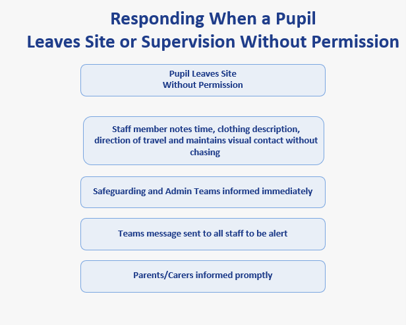
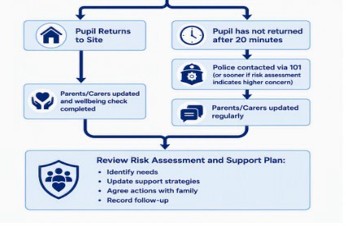
If a pupil leaves the school site without permission:
In the event that a pupil leaves supervision without permission whilst on a school trip or educational visit:
Learning Beyond the Classroom is an integral part of the Lime Hills curriculum and a curriculum entitlement. Access to this provision should only be restricted where there are clear safety concerns that cannot be reasonably mitigated through appropriate support, planning, and risk management.
All staff, students, and parents/carers will be provided with clear guidance regarding the use of personal technology including mobile phones within Lime Hills Academy.
In line with Department for Education guidance, Lime Hills Academy operates as a mobile phone-free environment throughout the school day. Students are required to place mobile phones and other personal smart devices in the designated storage area within their classroom, or another approved secure location, as directed by staff. Mobile phones and personal technology must not be used during lessons, social times, movement around the site, or any other part of the school day unless expressly authorised by a member of staff for educational, welfare, or medical purposes. At Lime Hills children hand all personal technology to a member of staff on the gate to be locked away.
Where a student's use of personal technology places the safety or wellbeing of others at risk, constitutes a safeguarding concern, or repeatedly disrupts learning, Lime Hills Academy will implement appropriate sanctions in line with the Behaviour Policy. This may include confiscation of the device and suspension.
Reasonable adjustments will be considered where a student requires access to technology because of a disability, medical need, or other identified need outlined within their EHCP or medical care plan.
Lime Hills Academy reserves the right to search students and their possessions, including school bags, where there are reasonable grounds to suspect that they may be carrying a prohibited or banned item. Searches will be conducted in accordance with current legislation and Department for Education guidance.
Authorised staff may search a student, with or without consent where permitted by law, for prohibited items, including:
Where there are reasonable grounds to suspect that a student may be carrying a prohibited item, Lime Hills Academy may use a handheld metal detection wand as part of the screening process. The use of a wand is intended to support the safety of students, staff, and visitors and will only be undertaken by authorised and appropriately trained members of staff.
Before a handheld wand is used, staff will consider whether the student's SEND needs require any adjustments to the process and whether alternative approaches may achieve the same safeguarding outcome. Where it is safe and appropriate to do so, students will be informed of the reason for the screening, what will happen, and what is expected of them.
The wand will only be used externally and will not involve physical contact with the student. Screening will be conducted respectfully, proportionately, and with due regard to the student's dignity, wellbeing, and individual needs.
Where a wand indicates the possible presence of a prohibited item, staff may ask the student to remove the item themselves or may proceed with a further search in accordance with statutory guidance and the academy's search procedures.
A record will be made of any search involving a handheld wand, including the reason for the search, staff involved, the outcome, and any follow-up actions required. Parents/carers will be informed where appropriate, taking account of safeguarding considerations.
Lime Hills Academy recognises that some students may experience communication difficulties, sensory sensitivities, anxiety, trauma-related responses, or other needs associated with their special educational needs
and disabilities (SEND). When considering any search or screening process, staff will take these needs into account and make reasonable adjustments where appropriate.
Reasonable adjustments may include:
The academy will always seek to balance the individual needs of the student with its duty to maintain a safe environment for all students, staff, and visitors. Where immediate safety concerns exist, staff will take proportionate action in accordance with statutory guidance and safeguarding procedures.
Any prohibited items found during a search may be confiscated, retained, disposed of, or handed to the police or other relevant agencies, where appropriate. Electronic devices may also be examined, and data may be deleted where staff have a lawful reason to do so and where this is necessary to address safeguarding, behavioural, or criminal concerns.
Under Section 91 of the Education and Inspections Act 2006, academy staff have the power to confiscate, retain, or dispose of a student's property where it is reasonable to do so. Lime Hills Academy is not required to obtain parental consent before a search takes place. However, wherever appropriate and practicable, parents/carers will be informed following a search, taking account of safeguarding considerations and the needs of the individual student.
Where a search identifies a safeguarding concern, the matter will be referred to the Designated Safeguarding Lead and managed in accordance with the academy's safeguarding procedures.
All staff at Lime Hills Academy work proactively to promote positive behaviour through strong relationships, restorative approaches, and de-escalation strategies. The use of restrictive physical intervention is always a last resort and is only considered, when necessary, proportionate, and reasonable in the circumstances.
In accordance with Section 93 of the Education and Inspections Act 2006, staff have the legal power to use reasonable force to prevent a pupil from:
The Academy recognises that behaviour is a form of communication and seeks to understand the underlying causes of distress or dysregulation. Wherever possible, staff will use proactive and preventative strategies to reduce the likelihood of incidents occurring.
Teaching and support staff receive accredited Team Teach training, including de-escalation, relational approaches, positive behaviour support, and authorised physical intervention strategies. The Academy adopts the Team Teach philosophy that most incidents should be resolved through de-escalation and regulation support, without the need for physical intervention.
Any use of restrictive physical intervention must:
All incidents involving restrictive physical intervention will:
Following any restrictive physical intervention:
Further guidance is provided in the Academy's Positive Handling and Restrictive Physical Intervention Policy (2026).
Lime Hills Academy recognises that incidents involving aggression or violence can be distressing for everyone involved. While the academy remains clear in its expectations around safe behaviour, it also acknowledges that some behaviours may be linked to unmet needs, trauma, or difficulties with emotional regulation. Responses will therefore balance accountability, safety and support.
Staff affected by an incident will be given appropriate time and space to regulate and recover before returning to their duties where required. A supportive and non-judgemental debrief will be offered, recognising the emotional impact such incidents can have on wellbeing and professional confidence.
Staff directly involved, together with any witnesses, will be supported to record their account of the incident as soon as practicable. A debrief with the Principal or a member of the Senior Leadership Team will provide an opportunity to reflect on the incident, review support strategies and identify any further actions required.
All staff have access to the Employee Assistance Programme (EAP). Where appropriate, additional support may be arranged through Professional Services to promote wellbeing, recovery and resilience.
At Lime Hills Academy, we are committed to maintaining a safe, nurturing and inclusive environment in which all
pupils can learn and thrive. Consistent with our relational and trauma-informed approach, suspension is not intended as a punishment but may be necessary as a protective response where safety, welfare or education are significantly affected.
There may be occasions where the academy's duty to protect the safety, wellbeing and education of others outweighs the benefits of maintaining a pupil in school. In these situations, suspension may be necessary as part of a wider package of support, safeguarding and risk management.
Suspension will only be used where it is lawful, reasonable, proportionate and necessary, and after appropriate supportive, preventative and restorative strategies have been considered. The academy will take account of individual needs and its duties under the Equality Act 2010, the SEND Code of Practice and any Education, Health and Care Plan (EHCP) when making decisions regarding suspension.
Where a suspension is deemed necessary, the academy will:
Following a suspension, a reintegration meeting will be held with the pupil and their parent/carer. The purpose of the meeting will be to restore relationships, identify any unmet needs, review support arrangements and agree strategies to help the pupil experience success on their return to the academy.
Where appropriate, support plans, risk assessments, therapeutic interventions or behaviour support strategies will be reviewed and amended following any suspension.
Permanent exclusion is a serious decision and will only be used as a last resort. The academy is committed to maintaining placements wherever it is safe and appropriate to do so. However, there may be exceptional circumstances where the level of risk, seriousness of an incident, or persistent inability to safely meet a pupil's needs means that permanent exclusion is the only lawful and proportionate option available
The academy recognises that behaviour is a form of communication and will always seek to understand the underlying causes of distress, dysregulation or challenging behaviour. However, there may be exceptional circumstances where the severity of an incident, or a pattern of serious incidents, means that permanent exclusion is necessary to protect the safety and wellbeing of the wider school community.
Only the Principal, or a designated representative acting with delegated authority, may make the decision to permanently exclude a pupil.
A decision to permanently exclude may be considered where:
In reaching any decision, the Principal will consider all relevant information, including contextual factors, safeguarding considerations, SEND, vulnerability and any mitigating or aggravating circumstances.
Where a pupil has a social worker, is looked after, or was previously looked after, the academy will notify the relevant social worker and/or Virtual School Head without delay..
The following factors may be considered when determining an appropriate response:
The following factors may be considered as aggravating circumstances:
Where a suspension or permanent exclusion is imposed, parents/carers will be informed without delay. The decision, reasons for the decision, duration (where applicable) and details of their rights will be confirmed in writing in accordance with statutory guidance.
The Academy Council will fulfil its statutory responsibilities regarding suspensions and permanent exclusions in accordance with current Department for Education guidance. This includes considering relevant cases, reviewing representations from parents/carers and ensuring decisions are lawful, reasonable, fair and proportionate.
Parents/carers have the right to make representations regarding suspension decisions in accordance with statutory guidance. In cases of permanent exclusion, parents/carers may request an Independent Review Panel following the Academy Council's decision.
Throughout any exclusion process, Lime Hills Academy will continue to work collaboratively with pupils, parents/carers, local authorities and external agencies to secure appropriate educational provision and support the best possible outcomes for the young person.
Lime Hills Academy remains committed to balancing compassion with accountability, understanding with expectations and support with safety. We believe that children achieve their best outcomes when they experience strong relationships, clear boundaries and consistent adult care. Through Protect, Relate, Regulate, Reflect and Repair, we seek not only to respond to behaviour but to help pupils develop the skills, responsibility and resilience needed to thrive in school and beyond.
This policy will be reviewed annually to ensure its effectiveness, and updated in response to new research or changes within the school community. Regular feedback from pupils, parents, and staff will be sought to continuously improve our strategies.
As a specialist SEMH provision we recognise that many pupils have experienced adverse life events, relational trauma, disrupted attachment, neurodivergence and chronic stress. These experiences can significantly impact emotional regulation, impulse control, trust in adults and peer relationships.
Behaviour is therefore understood as a stress response, not a choice made in isolation. We balance compassion and education with responsibility:
Core Principles
|
Support operates across overlapping layers and links to the graduated response offer
Universal (Relational Safety) |
We use the Trauma Informed model of: Protect – Relate – Regulate – Reflect – Repair, alongside nurture practice. |
Predictable routines, emotionally available, attuned and responsive adults, clear expectations, explicit teaching of regulation and social skills.
Targeted (SEMH Interventions) Individualised support plans, enhanced adult support, therapeutic input, and structured regulation opportunities. Specialist (High-risk Support) Risk led planning, multi-agency involvement, and intensive supervision to manage harm and safeguarding concerns. Pupils may move between layers within the same day depending on stress load, triggers and support available. |
| SEMH Curriculum
This supports the learning, rehearsing or teaching of positive behaviours |
Protective Actions (consequences)
To ensure the psychological safety of our school community. They are necessary to manage the risk of harm resulting from dangerous behaviours- this includes both physical and emotional harm. |
These focus on developing internal regulation and external structure, including:
|
Protective actions are used only when risk is present. They:
|
|
|
Low-level behaviours that indicate dysregulation, unmet need, or skill deficit rather than intent to harm. |
|||
| Behaviours indicating rising stress, anxiety, or loss of regulation.
Examples |
Staff response in the moment | Planned Support through the Graduated Response approach | |
|
Response focus: Protect, Regulate, Relate, Reflect, Repair |
|
|
|
|||
Behaviours that impact others’ safety, dignity or learning. |
|||
| Behaviours impacting emotional or physical safety.
Examples |
Staff response in the moment | Planned Support through the Graduated Response approach | |
|
Response focus: Protect, Regulate, Relate, Reflect, Repair | Reduce risk, contain emotion, restore safety.
Regulate first “You’re not in trouble. You’re safe. Let’s get your body calm first.” |
|
Require protective actions to ensure safety. |
|||
| Behaviours involving intent to harm, discrimination or significant safeguarding concern.
Examples |
In-the-moment response | Planned Support through the Graduated Response approach | |
|
Response focus: Protect, Regulate, Relate, Reflect, Repair |
Boundaried support “I can’t let you hurt anyone, but I can help you through this.” |
Used where behaviour presents a significant risk to physical safety, emotional safety, learning, safeguarding or wellbeing. These measures are intended to reduce risk, maintain safety, provide opportunities for regulation and support accountability through repair, reflection and reintegration. They are proportionate responses to risk rather than punitive sanctions.
Class team, SLT and parent meeting
Reconnection “We had a tough moment yesterday. I’m glad you’re back.” Repair |
| “What happened doesn’t define
you. Let’s think about how we put this right.” |
|||
Behaviours presenting an immediate and serious risk to life, safety, or wellbeing requiring urgent action. |
|||
| Immediate, severe risk to life or safety.
Examples |
· In-the-moment response | Planned Support through the Graduated Response approach
· |
|
|
Response focus: Protect, Regulate, Relate, Reflect, Repair |
|
|