

Lime Hills Academy aims to provide a safe, caring and friendly environment for all its pupils to allow them to learn effectively, improve their life chances and help them maximise their potential. The Academy takes the safety of pupils and staff very seriously. The Academy believes that all pupils and staff have the right to be safe and feel safe whilst at school or on a school-run activity.
This policy should be read in conjunction with the following policies:
This policy was formulated in consultation with the whole trust and whole school community with input from members of staff, Academy Council members, parents/carers, children and young people, and other partners. This policy is also written in line with national and local policy on the same subject.
This policy considers the legal requirements as outlined in the following legal framework:
This policy has due regard to all relevant legislation including, but not limited to, the following:
Education and Inspectors Act 2006 Health and Safety at work act
This policy has due regard to the following guidance:
Restrictive interventions, including the use of reasonable force in schools effective from 1/04
Terminology For clarity, this guidance will use the following definitions:
Restrictive intervention: a means to prevent, restrict, or subdue movement of the body, or part of the body, of a pupil. This guidance uses ‘restrictive interventions’ as the umbrella term to describe both physical and non-physical actions aimed to restrain pupils in different ways.
Reasonable force: a term used in legislation which includes physical restrictive interventions. All members of school staff have the legal power to use reasonable force in limited circumstances.4 Reasonable means using no more force than is necessary for the least amount of time, the application of which will depend on the circumstances.
Significant incident: any incident where the use of force goes beyond appropriate physical contact between pupils and staff as described in ‘Other physical contact with pupils’ within this document. This includes when physical force is used to implement a non-physical restrictive intervention.
Seclusion: a non-disciplinary intervention involving keeping a pupil confined to a place away from others, and preventing them from leaving either by physical obstruction, blocking, or making them believe they will be punished if they try to leave.
Restraint: a term used in legislation referring to a non-disciplinary intervention which immobilises a pupil or limits their movement. This may or may not include direct physical contact. The various restrictive interventions above have been defined for completeness and should not be construed as an endorsement or otherwise for their use in schools. Some will not be relevant to most schools.
Each Academy will appoint a member of their Senior Leadership Team with the necessary status and authority to be the responsible member of staff to oversee the application of the Positive Handling Policy. It may be that this is something that the Designated Safeguarding Lead or Deputy Designated Safeguarding Lead has the overview of, within their role of being responsible for matters relating to child protection and welfare who will attend senior leadership meetings to report on, plan and help implement Safeguarding across the Academy.
The overall responsibility for the appropriate application of this policy lies with the Principal and Senior Leadership Team. A key element of the application of the policy is the regular and timely training, which needs to be clearly tracked and monitored to ensure that all the
relevant staff have specific training on the use of reasonable force, within the context of
our Positive Handling approach.
All documentation must be kept in line with the Federation data storage policy https://clf.uk/wp-content/uploads/CLF-Data-Protection-Policy-June-2025-1.pdf
In addition to the above, Team Teach strongly recommends that all services should keep records / copies of incidents of restraint, for a minimum period of 25 years from the date of the incident.
The behaviour of some individuals presents a hazard to themselves and others. In settings which cater for individuals who exhibit hazardous behaviours, records serve a number of purposes:
Records:
The CLF and Elementa have now provide a training module on reporting incidents which can be accessed through the following link- https://elementa.thinkific.com/courses/reportingrecording
The Principal/SLT should monitor the use of Restrictive Physical Intervention, particularly Restrictive Physical Intervention (RPI), by examining:
The principal will ensure that:
It is the responsibility of any member of the school’s staff team to alert a member of the Senior Leadership Team of any concerns they have regarding any individual pupils in their care.
It is the responsibility of all federation staff follow the Whistleblowing and low-level concerns policy regarding perceived inappropriate use of restricted physical intervention
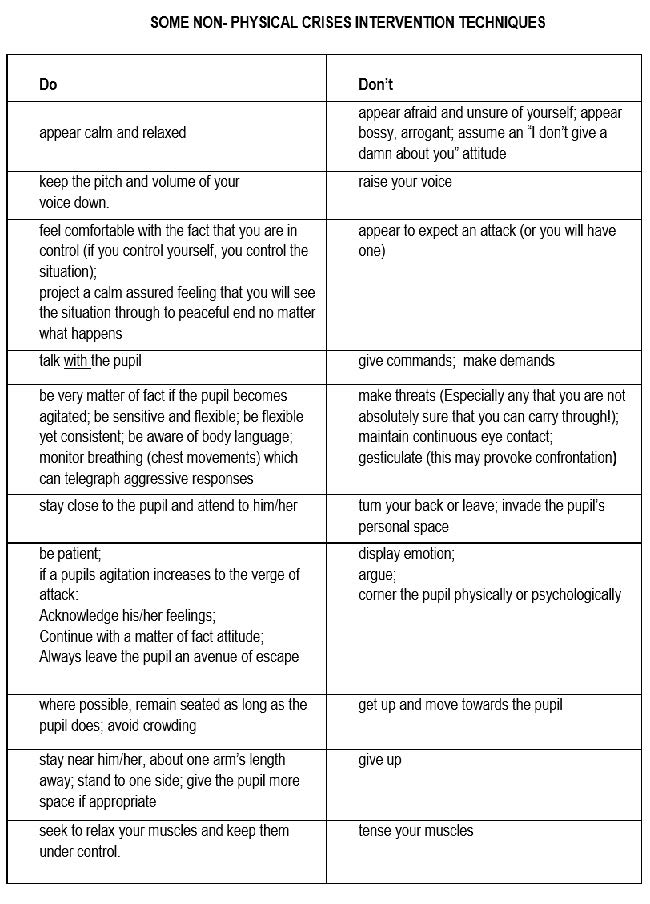
The Academy is firmly committed to creating a calm and safe environment which minimises the risk of incidents arising that might require the use of reasonable force. Staff use the PSHE curriculum to explore and strengthen emotional responses to situations. Staff will only use reasonable force as a last resort and strongly believe in de-escalating any incidents as they arise to prevent them from reaching a crisis point. Pupils who are presenting behaviours that may pose risk to themselves, or others will have a plan in place involving all appropriate parties to minimise the risk of use of reasonable force.
Staff will be skilled in promoting and rewarding positive behaviour and will utilise various appropriate techniques in the management of a class environment. Staff will only use reasonable force when the risks involved in doing so are outweighed by the risks involved by not using force.
All education professionals within the Cabot Learning Federation under the Before mentioned Education Act and Trust Safeguarding Policy are empowered to reasonable force under the assessment of reasonable, necessary and proportionate to keep young people safe while in the care of the federation
All members of school staff have a legal power to use ‘reasonable force’.
Under English law, members of staff are empowered to use reasonable force to prevent a pupil from or stop them continuing:
It is each member of staff’s responsibility to make an assessment of the particular circumstances. Staff will need to decide if control is appropriate, and if it is, at what level. It is not considered appropriate at to adopt a blanket approach to the use of Restrictive
Physical Intervention simply because a pupil may have emotional and behavioural difficulties. Staff will need to take the following factors into consideration:
This could include the following situations:
The Academy will ensure that all staff have an understanding of de-escalation skills as well as ensuring that a wide range of staff receive physical intervention training to manage challenging behaviour. The overall model would be to train all staff with a broad understanding and the de-escalation approaches and strategies that are part of overall culture. Lime Hills has embraced the Team Teach approach to positive handling.
The Team-Teach approach will:
Although all staff can use reasonable force for situations outlined in the above paragraph all academies will also be required to have a number of staff trained in the use of the Team Teach positive handling approach.
There is a CLF requirement that all CLF Academies have a minimum number of staff trained in this approach as outlined below:
Definition of all staff Is for all CLF contracted staff to complete training within 12 weeks.
Number of staff trained must be reflective of level of risk posed by current cohort and evidenced in continuous review process
Staff are also expected to remember that physical intervention is only one option and for behaviours involving extreme levels of risk it may be more appropriate to gain support from other agencies, including the police. Staff will be kept informed and have a duty to inform others about the plans around specific pupils who can present risks to themselves and others. This may include information about any specific SEN needs, personal circumstance and temporary upset. The information gathered here may be captured in the form of CLF Contextual Safety Plans.
Individual Child Risk Assessments, which include positive handling specific to a child may be put in place for pupils who are known to display behaviours that may lead to them becoming distressed or violent, contextual safety plans can also be used effectively in this case. In these circumstances it may be reasonable to withdraw the child to a safer place when the pattern of behaviour begins, rather than wait until the child is distressed and out of control. The overriding factor is that action is taken in the interest of the child to reduce rather than increase the risk.
When using force, members of staff should only use the minimum amount of force required in achieving the required outcome. It should never be carried out in a situation that involves anger.
When considering physical intervention staff should think about the following questions:
If staff can answer these questions, then it is more likely that physical intervention will be judged reasonable and proportionate.
Wherever possible two members of staff should be present prioritising trained staff to lead physical intervention. Staff should, where possible, avoid any type of intervention that is likely to injure a pupil, unless in the most extreme of circumstance where there was no viable alternative.
Other considerations:
The expectation of this Academy is that all staff support one another by offering help, but this does not mean taking over a situation. Staff make clear what help they need and use the following scripts to make clear what sort of assistance they need.
Scripts that may be used include:
In the ordinary course of maintaining a supportive and stable educational experience, staff may limit pupil’s liberty by requiring them not to do things that they may prefer to do, including restricting them within a building. However, if the pupil complies with the reasonable request, restriction of liberty is not an issue.
There may be occasions, however, when a pupil has lost self-control, and is intent on serious self-damage; inflicting injury on others; damage to property, or is considered potentially likely to do so, that it would be appropriate to prevent access to dangerous environments by locking doors to them. Restricting access under such circumstances is considered appropriate staff action.
Seclusion is non-disciplinary intervention involving keeping a pupil confined to a place away from others and prevented from leaving - should only be used as a safety measure to protect others from harm when a pupil is experiencing high levels of emotional or behavioural dysregulation. In such circumstances, the pupil is not acting with intent. Seclusion should not be implemented by staff through threat of punishment.
The place to which the pupil is confined should be safe and not feel threatening or intimidating to the pupil. The pupil should be supervised at all times during the period of seclusion. As soon as the immediate risk of harm has reduced, the pupil should be allowed to leave.
An incident involving the use of seclusion must be recorded and reported in accordance with the procedures outlined in the section on ‘Recording and reporting duties. Incidents should be recorded on CPOMS under the category of seclusion.
Seclusion, as defined in this guidance, is not a disciplinary response to deliberate or wilful misbehaviour. There are disciplinary measures that are similar, such as removal from the classroom. Schools should refer to their Academy Behaviour Policies for further information on these and other disciplinary measures. The academy Behaviour policy should be updated to reflect the difference.
Following the use of physical intervention, staff and pupils will be supported, the immediate physical needs of all parties will be met, and staff will ensure that positive relationships are maintained.
Where necessary emotional or wellbeing support will be offered to staff and where necessary further training will be given. Pupils will be allowed time to calm down before they return to their classroom environments. The incident will be discussed with pupils and
appropriate support and sanctions implemented. Sometimes it is more appropriate to
discuss events with pupils later in the day when they are more receptive to discussion.
Parent/ carer will be notified of the use of restrictive physical intervention before the child returns to their care.
Notification of the use of restrictive physical intervention is followed up with written confirmation using the federation template (appendix 3). Both hard copy and electronic copies are available. Translations and accessibility should be considered
All incidents will be logged as outlined in section 14.
Parents and carers are entitled to information on the behavioural management and positive handling techniques which staff employ in last resort situations or as part of a documented planned response to a student’s behaviour. The responses should be documented in the student’s individual plan/learner passport which includes a Positive Handling Plan element – detail as required.
Wherever possible and appropriate, they are also invited to contribute to their child’s individual (name of plan being used). It is considered ‘good practice’ for Parents / Carers to be given/have available a copy of the school’s policy on the use of reasonable force (Policy, along with the Behaviour Management Policy) to read. It is also good practice to demonstrate the hold which may be used with their young person, allowing the parents/carers to experience the hold where the parents/carer are willing.
(name of academy) recognises the contribution it can make to protect its children and support pupils and staff in school. The aim of the CLF Complaints Policy is to provide clear guidelines for the handling of any complaints.
The academy will also make clear to pupils that they have a right, and are able, to question/complain about the use of reasonable force. The Academy will ensure that mechanisms are in place for pupils, parents, carers and staff to voice the opinions, comments or concerns. Please refer to CLF complaints policy for further information.
Complaints and allegations will be taken seriously and will be investigated by the principal/relevant member of the SLT/Executive team and outcomes discussed with the relevant parties. Appropriate procedures will be followed and Academy Council involved if necessary. Ask Liz T /Rachel Friday to draft the sentence here which confirms this approach.
Letter to Parents / Carers Following Use of Physical Intervention with a Student
While our focus should always be on de-escalation, there may be occasions when a member of staff feels it is reasonable, proportionate and necessary to use a restrictive intervention in order to keep everyone safe.
In these situations, it is vital to keep parents and carers fully informed about what has happened, and ensure they are offered the opportunity to discuss the incident with any relevant staff members. Open, two-way communication underpins the restorative process, enabling schools and families to work collaboratively to find ways forward together.
A 3-step approach to support
It can be upsetting for parents and carers to find out that a physical intervention has been used to support their child. They may feel angry, worried, confused or frustrated about why the intervention was necessary, and what will happen in future to reduce the likelihood of it happening again.
It’s helpful to put a robust 3-step system in place following the use of any restrictive practice so you can inform and support families and ensure they are part of decision-making processes:
Letter Template
Dear [insert parent / carer name]
Further to our conversation, here are the details of the recent incident involving your child:
| Date, time, duration, and location of the incident | Insert the date, time, duration, and location of the incident |
| Details of the incident | Include:
|
We understand that you may be feeling worried or upset about what has happened. Please be reassured that the safety and wellbeing of your child is always our priority and physical interventions are only used as a last resort in order to keep everyone safe. The Team Teach information leaflet included explains more about the ways we support your child at school.
We would like to find a convenient time to discuss what we can do to reduce the likelihood of this happening again and find the best ways to support your child moving forward.
Please get in touch to let us know when you would be available to meet [insert contact details].
If you have any concerns about your child’s physical, emotional or mental wellbeing as a result of this incident, or want to ask any questions, please do get in contact. If you are worried about your child’s health, especially in relation to any physical symptoms, please contact your doctor immediately.
Yours sincerely
[add staff member / leader name]